Services / Electrocardiogram (ECG)
Electrocardiogram (ECG)
A quick, painless recording of your heart’s electrical activity — often the first test when palpitations, chest pain, or dizziness need an answer.
OHIP-insured with requisition
What it is
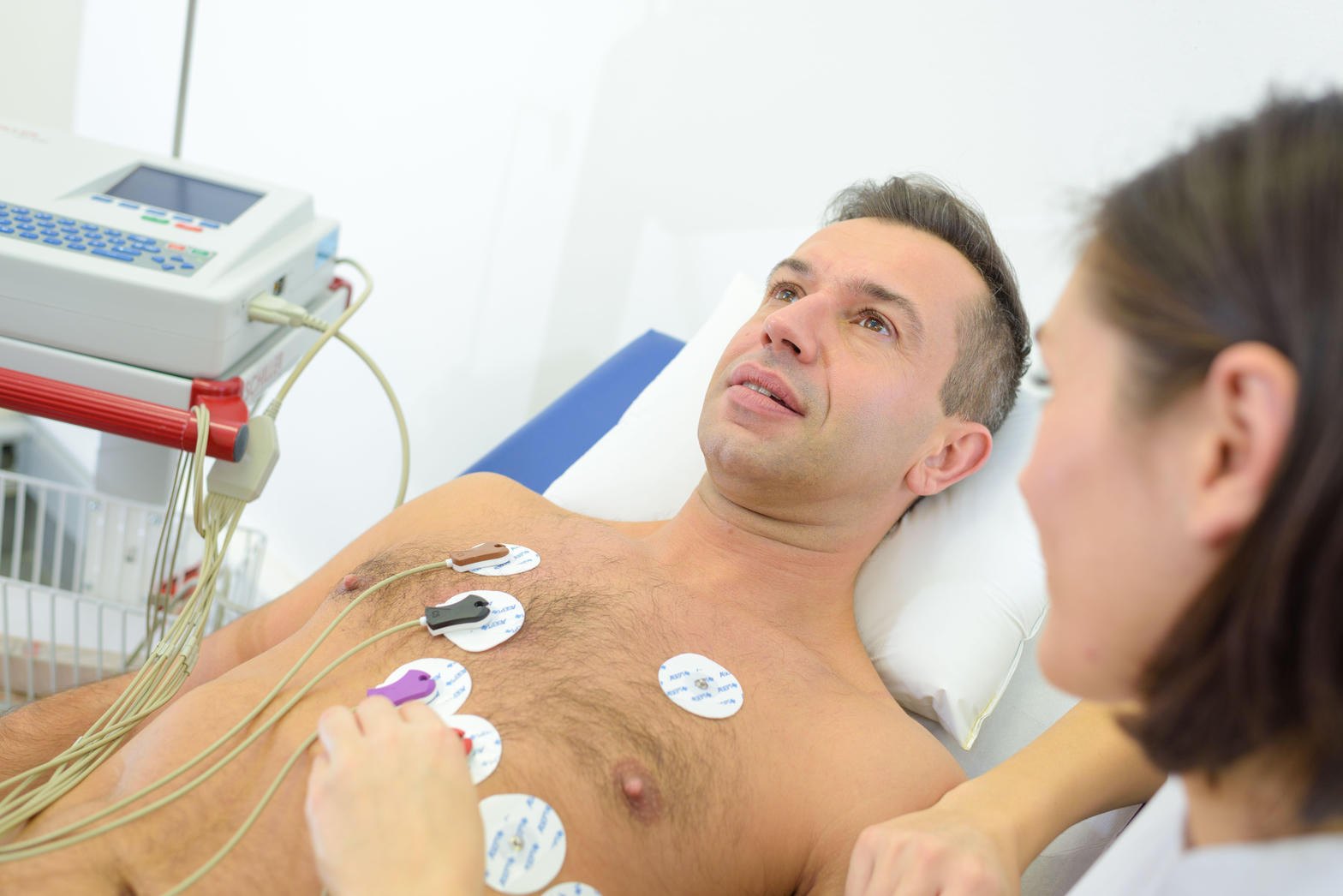
A 12-lead electrocardiogram (ECG or EKG) records the electrical signals that make your heart beat. Stickers (electrodes) are placed on your chest and limbs for about a minute while you lie still. The tracing can show rhythm problems, signs of a prior heart attack, thickening of the heart muscle, and other electrical patterns your cardiologist uses to guide care.
Why it is ordered
- Palpitations, skipped beats, chest pain, dizziness, or fainting
- Baseline recording before other cardiac tests or procedures
- Monitoring known heart disease or the effect of medications
- Pre-operative assessment when requested by your surgeon or family doctor
Before your visit
- 01No preparation is needed
- 02Wear a top that is easy to remove; avoid heavy lotions on the chest
- 03Bring a list of medications — some affect the electrical pattern
- 04Bring your health card and requisition
During the test
- 01You lie on the exam bed
- 02Electrodes are placed on the chest, arms, and legs; a small area may be shaved if needed
- 03Lie still and breathe normally for a short recording
- 04The tracing is reviewed by a cardiologist
After
- 01Stickers are removed and you can leave immediately
- 02Resume normal activity
- 03Results are sent to your referring physician
Questions we hear often
Ready to refer, or have a question?
Patients: ask your family doctor for a CardioCare requisition, or call us and we will help you get started. Physicians: complete the form — it takes a couple of minutes.