Services / Holter Monitoring
Holter Monitoring
A small portable ECG you wear at home so we can see your rhythm through a full day of living — work, rest, exercise, and sleep.
OHIP-insured with requisition
What it is
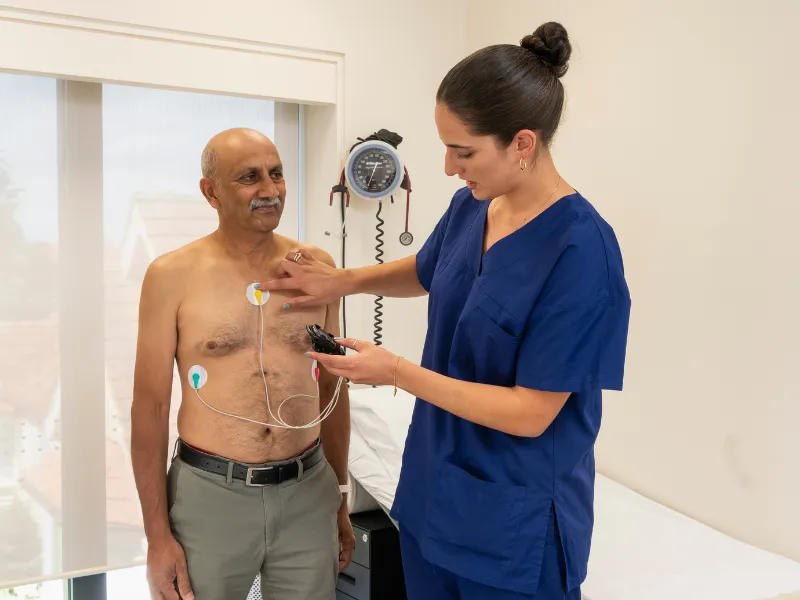
A Holter monitor is a portable ECG. A technologist places a few electrodes on your chest and connects them to a recorder you wear in a small pouch. Unlike a clinic ECG, it records continuously while you go about your day. You keep a simple diary of symptoms — palpitations, dizziness, chest discomfort — so we can match how you felt with what the rhythm was doing.
Why it is ordered
- Palpitations, skipped beats, or a racing heart that is not caught on a clinic ECG
- Unexplained dizziness, lightheadedness, or fainting
- To check how well a medication or pacemaker is controlling your rhythm
- To look for silent ischaemia or pauses when clinically indicated
Before your visit
- 01Wear a loose button-front or stretchy top so the recorder sits comfortably
- 02Bathe before you arrive — you cannot shower while the monitor is on
- 03Do not use heavy lotions or oils on the chest the morning of fitting
- 04Bring your health card, requisition, and medication list
During the test
- 01Three to five electrodes are placed on the chest; the recorder sits in a pouch
- 02Go about ordinary activities; avoid swimming, baths, and heavy sweating if possible
- 03Press the event button and jot a note if you feel symptoms
- 04Example diary: 9:00 wake, 9:30 breakfast, 10:15 walk (palpitations), 22:00 bed
After
- 01Return the monitor at the time you are given — do not throw it away
- 02A cardiologist reviews the full recording against your diary
- 03The report is sent to your referring physician
Questions we hear often
Ready to refer, or have a question?
Patients: ask your family doctor for a CardioCare requisition, or call us and we will help you get started. Physicians: complete the form — it takes a couple of minutes.